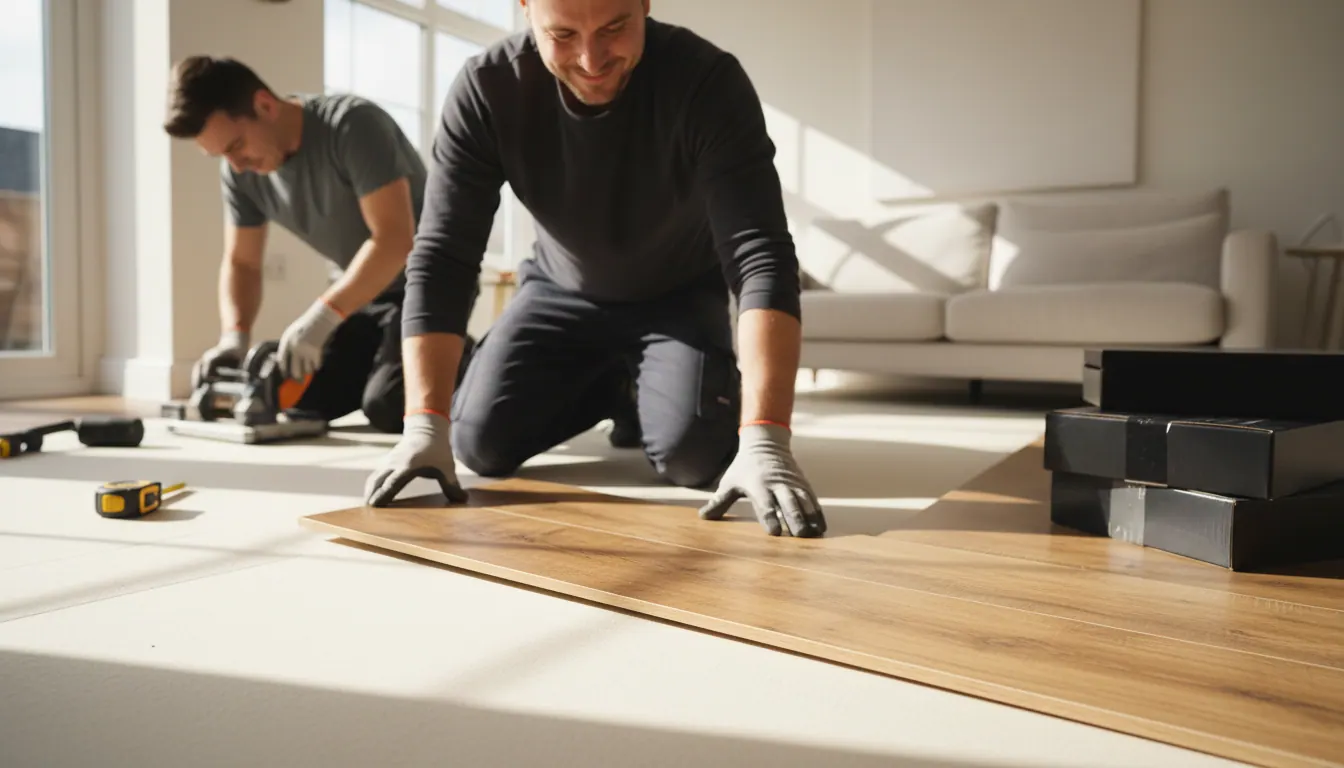
Subfloor Preparation for Flooring in Newark: Why DPM, Levelling & Screeding Matter
Poor subfloor preparation ruins new flooring fast. We explain exactly what's involved and why it matters for homes across Newark and the East Midlands.

Why the Subfloor Is the Most Important Part of Any Flooring Job
A new floor only looks as good as what's underneath it. That sounds obvious, but it's the thing most people don't think about until something goes wrong, a ridge that telegraphs through their LVT, a laminate board that lifts at the edge, a vinyl that bubbles within months of fitting. Every one of those problems traces back to the same cause: the subfloor wasn't ready.
We've worked on hundreds of floors across Newark-on-Trent, Nottinghamshire, Lincolnshire and Leicestershire, and subfloor preparation is the step we never skip or rush. It's also the step that separates a floor that lasts a decade from one that needs replacing in two years.
This guide explains what proper subfloor preparation actually involves, why different flooring types demand different approaches, and what to watch for in older East Midlands properties where the ground conditions can throw up a few surprises.
What Does Subfloor Preparation Actually Involve?
It's not just sweeping the floor and laying boards. Proper subfloor preparation covers several distinct stages, and which ones apply to your project depends on the existing floor construction and the finish you're going for.
Here's what the process typically includes:
- Inspection and assessment. We check for movement, unevenness, damp, contamination and any previous adhesive or levelling compound that needs removing.
- Lifting old flooring. Old carpet, vinyl or tiles come up first. We handle the full lift and disposal, so you don't need to worry about that side of things.
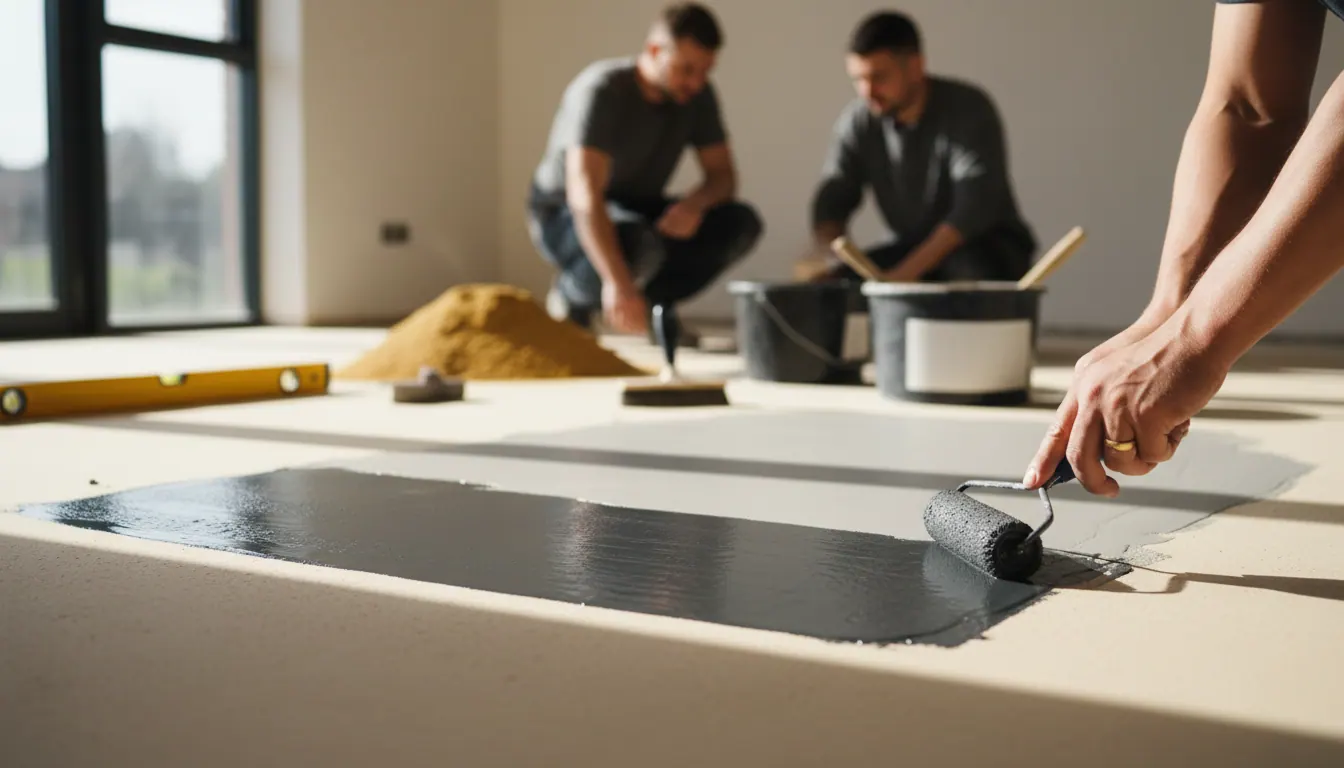
- Damp proof membrane (DPM) installation. On concrete ground floors, if moisture readings are above acceptable levels, a DPM goes down before anything else. Moisture is the silent killer of adhesive-fixed LVT and hardwood. It will cause failures, and no amount of premium flooring will compensate if it's sitting on a damp slab.
- Floor levelling and latex screeding. Any dips, ridges or high spots get addressed with a self-levelling compound. LVT is typically 2.5 to 5mm thick, which means even a 1mm ridge underneath it will show through to the surface. The tolerance is tight.
- Surface smoothing. On timber subfloors, loose boards are re-fixed, squeaks are addressed, and any sheet material such as plywood is secured and sanded flush at the joints.
Each stage has a reason. None of it is padding on the invoice.
Concrete vs Timber Subfloors: The Approach Is Different
Most homes across Nottinghamshire and Lincolnshire have one of two subfloor types: a solid concrete slab (common in post-war and modern builds) or a suspended timber floor (typical in Victorian and Edwardian properties, and in many of the older terraced and semi-detached homes you find across Newark and the surrounding villages).
Concrete subfloors are generally more stable but more prone to moisture issues, particularly in older properties where the original DPM has failed or was never installed. We always test moisture levels before committing to an adhesive or a floating installation. If the reading is high, a liquid DPM or a sheet membrane goes down. That's not optional.
Timber subfloors move seasonally. They expand and contract with humidity changes, and that movement needs to be accommodated in the flooring choice and fixing method. Loose or springy boards are a problem regardless of what goes on top. We re-screw or nail down any movement before screeding or laying.
The wrong approach for either type creates problems that aren't immediately obvious. They show up six months later, and by then the floor needs to come back up.
Why Older East Midlands Homes Need Extra Attention
A lot of the housing stock in Newark-on-Trent and across the East Midlands is older. Pre-war terraces, Victorian semis, bungalows built in the 1950s and 1960s, farmhouses out in the Lincolnshire and Nottinghamshire countryside. These properties are beautiful but they come with subfloor conditions that newer builds simply don't have.
Ground-floor concrete in older homes was often laid without a membrane, or with a membrane that has long since degraded. Timber floors may have had multiple layers of old vinyl and adhesive built up over the decades. Levels can be wildly inconsistent across a single room, let alone across a whole ground floor.
Ian Coddington, one of our customers, described exactly this kind of project in his review:
"Excellent, helpful, knowledgeable, hardworking guy. Nathan and his team went above and beyond for us and our project. They laid the DPM, self leveling and the flooring we requested. We chose 3 different coloured flooring for the whole bungalow and it was laid in a herring bone pattern throughout. We would definitely recommend them and already thinking of other family members and friends who would need some new flooring. Very reasonable price too. 5+* treatment for an average price. Thank you so much"
That project involved DPM installation, self-levelling compound and a full herringbone LVT fit across an entire bungalow. It's a good example of how the prep work and the finish are part of the same job. You can't separate them.
How to Prepare a Subfloor for LVT Specifically
LVT is the most unforgiving flooring type when it comes to subfloor quality. Its rigidity and thinness mean it faithfully reproduces whatever is underneath it. A lump, a dip, a screw head, a join in the plywood: all of it will show.
For a glue-down LVT installation, the subfloor needs to be:
- Flat to within 3mm over a 1.8m straight edge (check the manufacturer's specification, as some premium products require tighter tolerances)
- Dry, with moisture content within the acceptable range for the adhesive being used
- Clean and free from contamination, old adhesive, grease or dust
- Structurally sound, with no flex or movement
For a floating LVT click system, the tolerances are slightly more forgiving, but the principle is the same. If the surface isn't flat, the locking joints will be put under stress and they'll start to fail.
We bring the right self-levelling products and the experience to read a floor accurately before we touch it. If you're thinking about a herringbone or chevron LVT layout, have a read of our guide to LVT flooring installation in Newark for more on why professional fitting makes such a difference to the end result.
How to Prepare a Subfloor for Laminate Flooring
Laminate is a floating floor, so it doesn't bond to the subfloor. That means moisture and unevenness are still a concern, but the approach differs slightly from LVT.
The subfloor needs to be flat (similar tolerances apply), dry and clean. A foam or felt underlay goes between the laminate and the subfloor to cushion the boards and provide a small amount of acoustic dampening. On concrete floors, a DPM underlay or a separate membrane beneath a standard underlay is essential if there's any moisture risk at all.
On timber floors, make sure every board is secure before the laminate goes down. A squeaky or springy floor beneath a floating laminate will amplify the noise and stress the locking joints over time.
If you're weighing up laminate against LVT for your project, our comparison piece on luxury vinyl tiles vs laminate covers the trade-offs honestly.
Can You Put Flooring Directly on the Subfloor Without Preparation?
Technically, yes. In practice, it's a decision that costs more in the long run than the preparation would have.
Skipping the levelling compound, ignoring a damp reading or laying over a loose timber floor might save a day's work upfront. But the floor will move, the adhesive will fail, the finish will look uneven and you'll be back to square one within a couple of years. We've seen it. The preparation isn't an upsell. It's the reason the floor stays down and looks right.
Frequently Asked Questions
How should I prepare my subfloor for LVT flooring? The subfloor needs to be flat, dry and clean. For concrete, that means testing for moisture and installing a DPM if readings are high, then applying self-levelling compound to correct any unevenness. For timber, secure any loose boards first, then consider a plywood overlay before levelling. LVT is thin and rigid, so even minor imperfections will telegraph through to the surface.
Can I put flooring directly on the subfloor without any preparation? Only if the subfloor already meets the required flatness, dryness and stability tolerances for the specific product you're fitting. In most homes across Newark and the East Midlands, particularly older properties, some level of preparation is needed. Skipping it risks adhesive failure, visible ridges and boards lifting within months.
How do I prepare a subfloor for laminate flooring? Ensure the subfloor is flat, dry and structurally sound. Secure any loose timber boards, remove old adhesive or debris, and lay an appropriate underlay. On concrete ground floors with any moisture risk, use a DPM underlay or install a separate membrane first. Laminate is a floating floor, so it doesn't bond down, but moisture and unevenness still cause failures over time.
How much does subfloor preparation add to the cost of a new floor? It varies depending on the condition of the existing floor and the size of the area. A straightforward smooth and level job on a small room costs considerably less than a full DPM installation and deep levelling across a whole ground floor. We assess every job individually and include all preparation costs in our quotation upfront, so there are no surprises once the work starts.
Getting the subfloor right before a single plank goes down is what separates a floor that performs for years from one that disappoints quickly. If you're planning a new floor in Newark-on-Trent or anywhere across Nottinghamshire, Lincolnshire or Leicestershire and you're not sure what condition your subfloor is in, we're happy to take a look. We offer free home measures and bring samples to you, so the whole process is straightforward from the start. Get in touch with us and we'll arrange a convenient time to visit.
“Nathan and team provided an exceptional service and a high quality flooring finish. Despite the difficulties with the under flooring they were professional, knowledgeable and dedicated to ensuring they completed the job. Would highly recommend for anyone wanting flooring done.”