Flooring for Bathroom Refits in Newark: Moisture-Resistant Options for Flats & Upper Floors
Choosing moisture-resistant bathroom flooring in Newark or the East Midlands? We explain what works, what to avoid, and why professional fitting makes the difference.
Bathroom Flooring That Actually Handles Moisture: What to Know Before You Choose
Bathrooms are unforgiving. Steam, splashes, condensation around the base of the bath, water sitting on the floor after a shower, the surface underfoot takes a constant hit. Get the flooring wrong and you are not just looking at a cosmetic problem; you are looking at swollen edges, lifting joints and, in older properties, moisture working its way into the subfloor beneath.
We fit bathroom flooring across Newark-on-Trent and the wider East Midlands regularly, and the same questions come up every time. What is genuinely waterproof versus merely water-resistant? Can you use LVT in a wet room? Does it matter what goes underneath? This article answers all of that plainly, without the marketing fluff.
What Is the Best Waterproof Flooring for a Bathroom?
The short answer: luxury vinyl tile (LVT) is the most practical choice for most bathrooms. It is 100% waterproof through its core, dimensionally stable, available in a huge range of realistic finishes, and comfortable underfoot in a way that ceramic tile simply is not.
That said, "waterproof" is a word that gets used loosely. Here is how the main options actually compare:
- LVT (luxury vinyl tile or plank): Fully waterproof through the wear layer and core. Joints need to be properly fitted and, in a wet room, silicone-sealed at edges and around fixtures. Warm underfoot, quiet, available in wood, stone and abstract designs.
- Ceramic or porcelain tile: Genuinely waterproof and extremely durable. The tile itself is fine; the grout lines are the weak point. They need sealing and maintaining, and they are cold and unforgiving underfoot.
- Vinyl sheet flooring: A single continuous sheet with no joints, which makes it arguably the most watertight option of all. Less design variety than LVT, but excellent in bathrooms with awkward layouts or where a seamless finish matters most.
- Laminate: Not suitable for bathrooms, full stop. Even products marketed as "moisture resistant" will swell and delaminate with repeated exposure to steam and standing water. We do not recommend it here, and we will say so plainly.
- Carpet: We get asked about this. Some people do want carpet in a bathroom, and there are moisture-resistant bathroom carpet products. We would generally steer people away from it in a wet room or family bathroom, it holds moisture, it harbours bacteria, and it degrades quickly. In a separate toilet room with lower humidity, it is more defensible, but LVT or vinyl is still a better long-term choice.
- Engineered hardwood: Not appropriate for a bathroom. Moisture and hardwood are a bad combination regardless of finish.
What Can You Put on a Bathroom Floor Instead of Tiles?
Tiles are the default, but they are far from the only option. LVT has taken a significant share of the bathroom flooring market for good reason: it looks like stone or wood, it is warmer and softer underfoot, and it is easier to fit around awkward shapes like toilet bases, pedestal sinks and bath panels.
Sheet vinyl is the other strong alternative. It is seamless, so there are no joints for water to track into. In a bathroom that sees heavy use, a family bathroom with young children, for instance, a well-fitted sheet vinyl is hard to beat for pure practicality.
The key phrase in that last sentence is "well-fitted." A sheet vinyl or LVT floor that has been cut poorly around a toilet base, or left without a proper silicone bead at the bath edge, will let water in. The material itself is not the weak point. The installation is.
Does Bathroom Flooring Need to Go Under the Toilet?
Yes. This comes up often and the answer matters practically. Fitting flooring around the base of the toilet rather than underneath it creates a gap, and that gap collects moisture, bacteria and cleaning product residue. It also means that if the toilet ever needs to be removed (for a refurb, a leak, or repositioning), you are left with an unfinished patch of subfloor.
Fitting the flooring first, then reinstalling the toilet on top, gives a clean, hygienic finish and makes future maintenance far simpler. It adds a small amount of time to the job, but it is the right way to do it. Our fitters work this way as standard.
Why the Subfloor Matters as Much as the Product
This is the part that DIY guides tend to gloss over, and it is where most bathroom flooring problems actually originate.
LVT is thin, typically between 2mm and 5mm depending on the product. That thinness is part of its appeal, but it means that every ridge, dip or imperfection in the subfloor beneath telegraphs straight through to the surface. Over time, traffic over an uneven subfloor will stress the joints and wear layer of even a premium product.
In older properties across Nottinghamshire, Lincolnshire and Leicestershire, bathroom subfloors are often uneven, sometimes damp, and occasionally a patchwork of old tile adhesive and filler from previous refits. Older housing stock in the region, Victorian terraces, 1930s semis, post-war bungalows, tends to have subfloors that need attention before any new floor covering goes down. We assess this before we quote, and we carry out our own subfloor preparation including latex screeding, surface smoothing and damp proof membrane installation where needed.
If you are interested in how subfloor preparation works and why it matters, our article on damp proof membranes and floor levelling in older Newark and East Midlands properties goes into the detail.
LVT Specifically: What Makes It Right for Bathrooms
We fit a lot of LVT, and bathrooms are one of the spaces it performs best in. A few specifics worth knowing:
- Wear layer thickness: In a bathroom, look for a wear layer of at least 0.3mm, ideally 0.5mm or above. Thicker wear layers resist scratching from grit tracked in on wet feet.
- Click vs glue-down: Both work in bathrooms. Glue-down LVT gives a more solid feel underfoot and is better in wet rooms where maximum adhesion matters. Click LVT is faster to fit and easier to replace individual planks or tiles if damage occurs.
- Texture and slip resistance: Bathroom floors need a surface that provides grip when wet. Many LVT products have a textured surface that helps with this. It is worth checking the slip-resistance rating (R-value) on any product you are considering, particularly for households with elderly residents or young children.
- Sealing at edges and transitions: Even a fully waterproof LVT floor needs silicone sealant at the junction with the bath, shower tray and any wall upstands. This is not optional. It is the difference between a floor that stays dry underneath and one that lets water creep in over months.
For a broader look at LVT and how it performs in different rooms, our article on LVT flooring installation in Newark covers the fitting process and why professional installation makes a measurable difference to the finished result.
What Our Customers Say
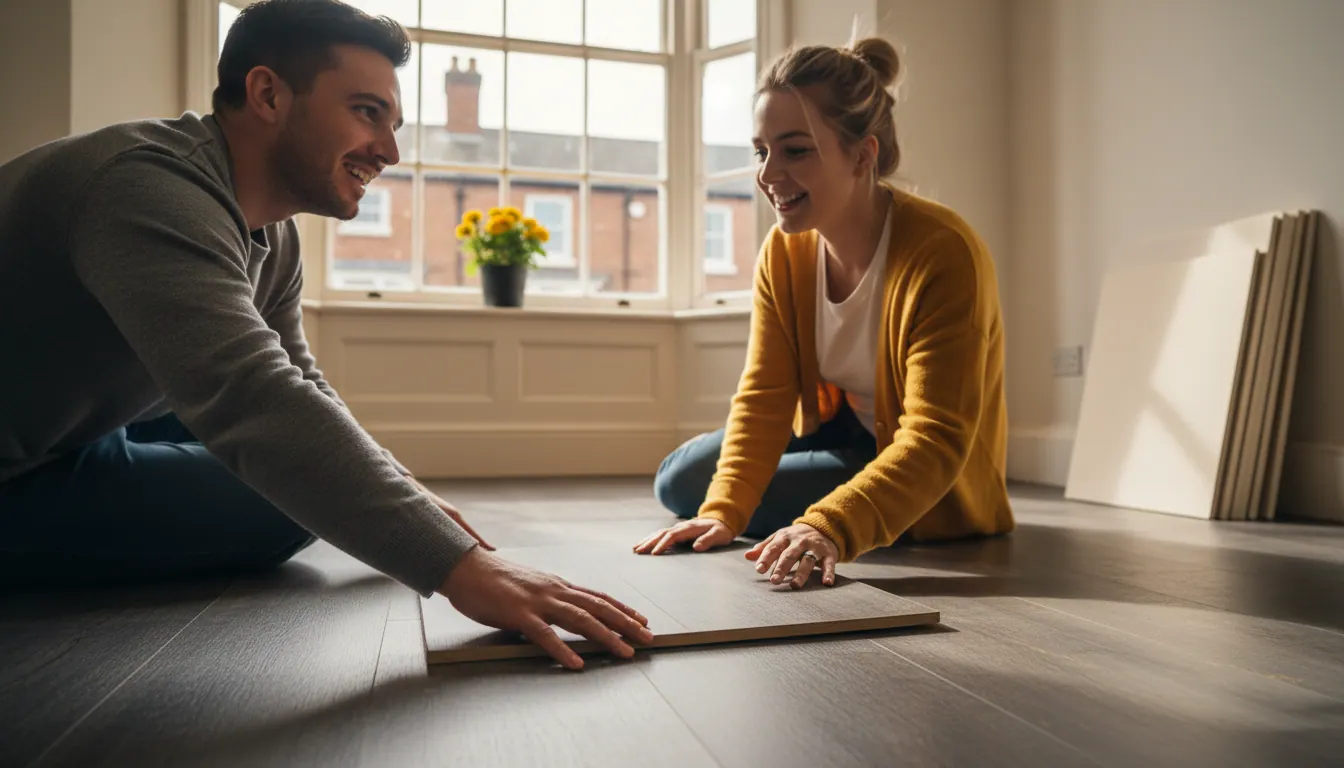
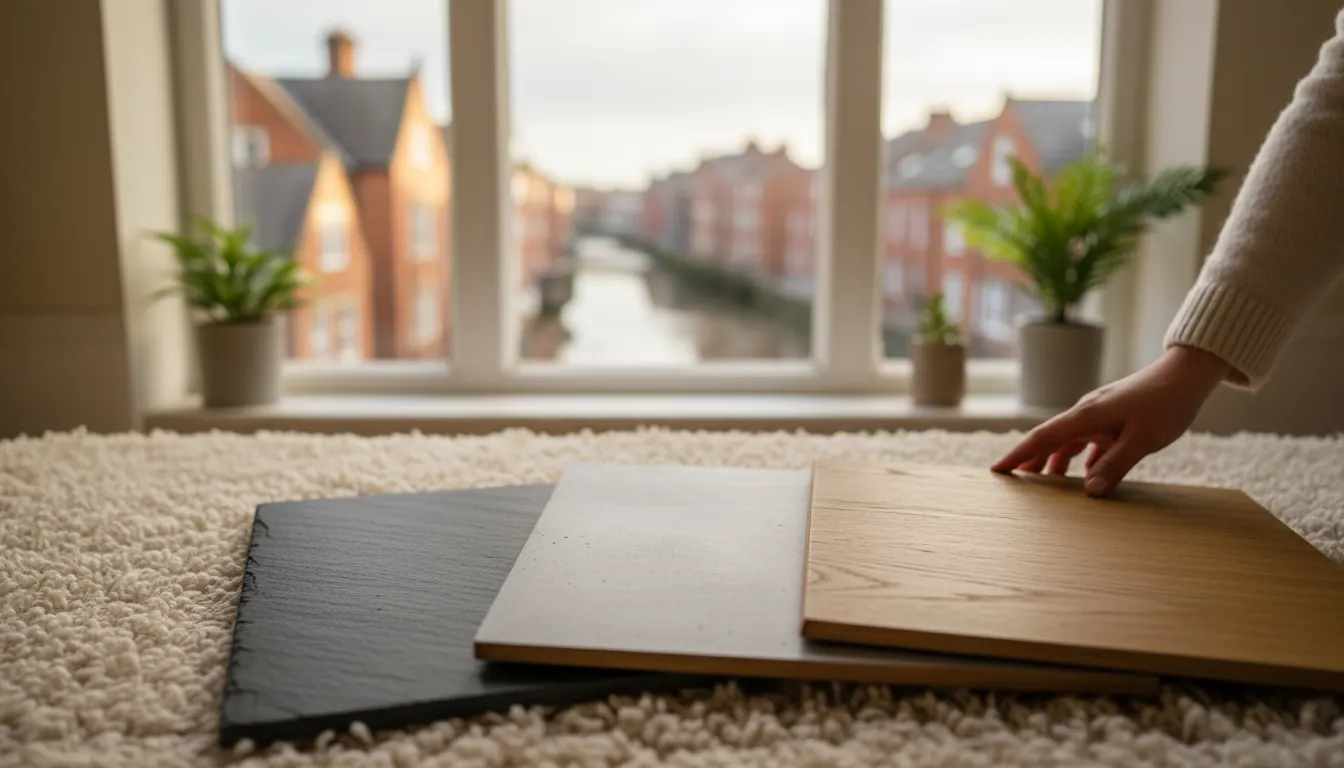
We brought samples to one customer's home across multiple visits because she wanted to be sure of the finish before committing. That is exactly how we work, no pressure, no guessing from a small swatch.
"Really happy with the service from Nathan from start to finish. His communication was brilliant throughout, and he came out a few times to measure up and show me different flooring samples, which was really helpful as I'm super indecisive. I managed to get a date booked in pretty quickly, and the whole job was completed within 2 days. They removed all the old carpets and replaced them with LVT, and I'm really pleased with how it's turned out, the finish is to a really high standard. They were also really clean and tidy, which I appreciated. They cleaned up between the two days and left everything tidy once the job was finished. Would definitely recommend Nathan and the team. Great service, great communication and a really lovely finish. Thanks again!"
Mol Lane, 5-star Google review
The finish and tidiness Mol mentions are not incidental. In a bathroom, a messy cut around a toilet base or a poorly finished edge is not just unsightly, it is a functional problem. Getting the detail right is the whole job.
Frequently Asked Questions
What is the best waterproof flooring for a bathroom? LVT (luxury vinyl tile) is the most practical choice for most bathrooms. It is fully waterproof through its core, comfortable underfoot, available in realistic wood and stone designs, and easier to fit around fixtures than ceramic tile. Sheet vinyl is also excellent, particularly where a seamless, joint-free finish is the priority.
What can I put on a bathroom floor instead of tiles? LVT and sheet vinyl are both strong alternatives to ceramic or porcelain tile. LVT in particular has overtaken tile in many domestic bathrooms because it is warmer, quieter, and easier to fit in awkward spaces. The critical factor is professional fitting: the material only performs as well as the installation beneath it.
Should bathroom flooring go under the toilet? Yes, always. Fitting the floor first and reinstalling the toilet on top gives a hygienic, cleanable finish with no gaps around the base. It also makes future maintenance easier if the toilet ever needs to be removed. Cutting around the toilet base leaves a gap that collects moisture and looks unfinished.
Does LVT work in a wet room or shower area? LVT can be used in wet rooms, but it needs to be glue-down rather than click-fit, and all edges, upstands and transitions must be silicone-sealed properly. In a walk-in shower area, many fitters and manufacturers would still recommend tile for the immediate shower zone, with LVT used for the surrounding floor. We will advise on the right approach for your specific bathroom layout when we come out to measure.
Ready to Talk About Your Bathroom Floor?
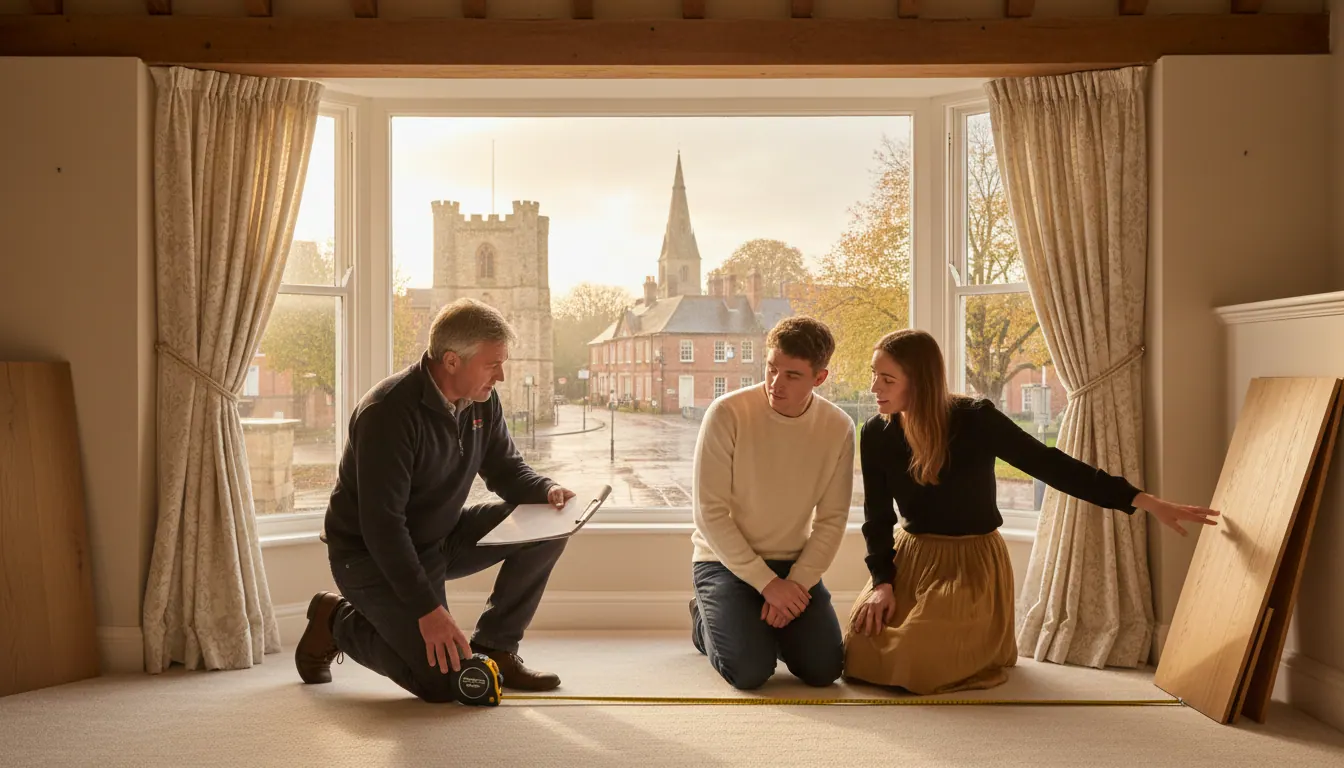
If you are planning a bathroom refit anywhere across Newark-on-Trent, Nottinghamshire, Lincolnshire or Leicestershire, we are happy to come out, take measurements and bring samples so you can see how different finishes look in your actual space. No obligation, no pressure.
Get in touch with us to arrange a free home measure and quotation.