Karndean Flooring Repair & Maintenance in Newark: Expert Tips from Pro Flooring
Karndean flooring repair done properly in Newark-on-Trent and across the East Midlands. Expert advice on fixes, common problems and when to call a professional.

Karndean floors are built to last, but they are not indestructible
LVT is one of the toughest floor coverings available. Karndean in particular is engineered to handle busy households, pets, and the kind of daily punishment that would ruin a softer floor. But scratches happen. Tiles lift. Finishes dull. When they do, the question is always the same: can it be fixed properly, or does the whole floor need to come up?
The short answer is yes, Karndean can almost always be repaired. The longer answer depends on the type of damage, how old the floor is, and whether the right preparation was done when it was first installed. We have repaired Karndean floors across Nottinghamshire, Lincolnshire and Leicestershire, and the jobs that go smoothly are almost always the ones where the subfloor was done correctly first time round.
Common problems with Karndean flooring and what causes them
Understanding what has gone wrong makes it much easier to fix it well. These are the issues we see most often across the East Midlands.
Lifting or curling edges This is usually a subfloor problem. If the subfloor was not flat enough, not dry enough, or not primed correctly before installation, adhesive bond fails over time. Edges lift first, particularly around doorways and in kitchens where temperature and humidity fluctuate. Occasionally the adhesive itself has simply aged out, especially on older installations.
Surface scratches and scuffs Karndean carries a wear layer, and light surface marks often respond to a good clean and a coat of Karndean Refresh floor polish. Deeper scratches that cut through the wear layer into the print film are a different matter. Those need a repair kit approach or, in some cases, a plank or tile replacement.
Dull or patchy finish This is nearly always a maintenance issue rather than structural damage. A build-up of the wrong cleaning products, or simply a floor that has not been polished in years, can look worn-out when the actual vinyl beneath is perfectly sound. Strip it back, clean it properly with a Karndean floor cleaner, and apply a fresh coat of Refresh. The difference is significant.
Cracking or splitting Less common, but it does happen, usually where the floor has been exposed to very low temperatures or where something heavy has been dropped. A cracked tile or plank can sometimes be repaired in situ, but a clean replacement is usually the better outcome if the damage is visible in a prominent area.
Staining Most stains on Karndean lift with the right cleaner. Stubborn marks, particularly from rubber-backed mats left in place for a long time, can be more persistent. These often respond to a targeted treatment before any polish is applied.
What a professional Karndean repair actually involves
A repair kit from a trade counter or online supplier will sort a minor scuff or a small area of dull finish. For anything more involved, the process is more considered than people expect.
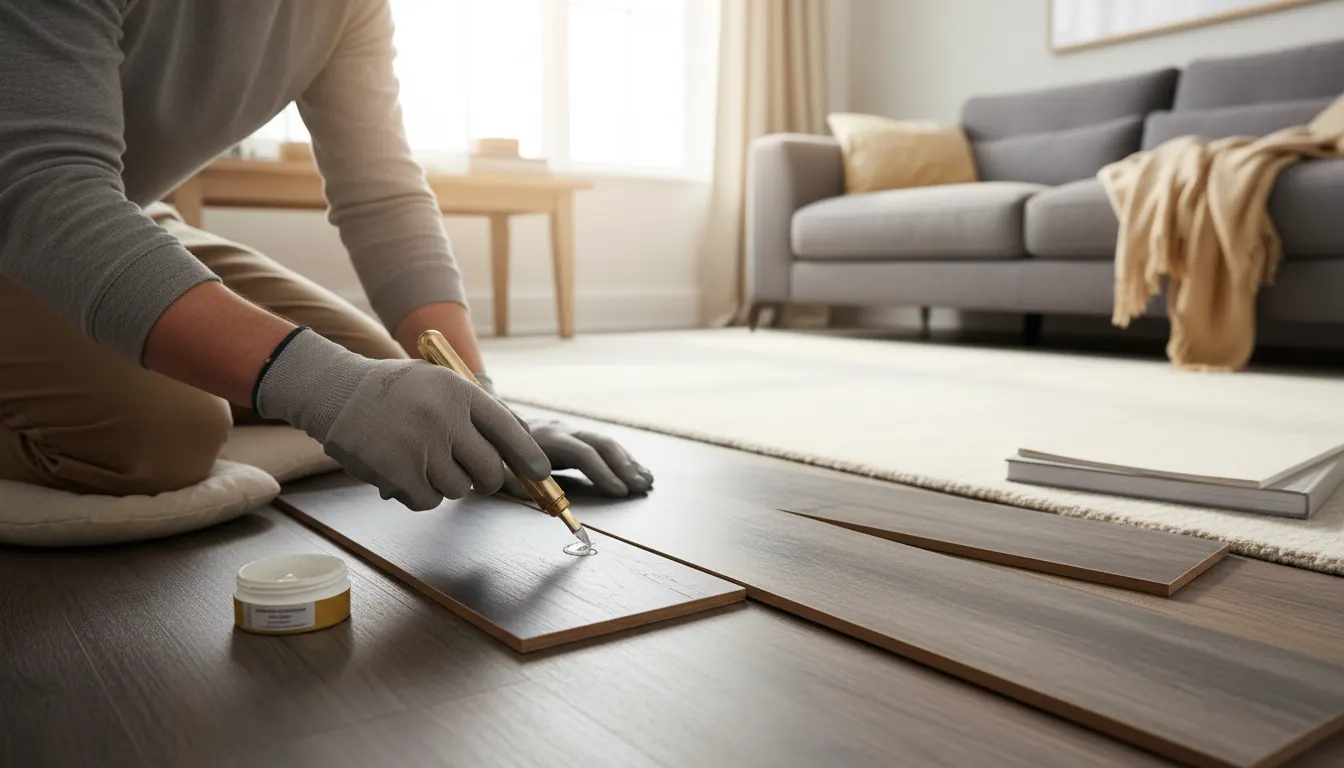
Lifting and rebonding a loose tile or plank The affected piece is carefully lifted without damaging the surrounding floor. The old adhesive is removed from both the subfloor and the back of the tile. The subfloor is checked for flatness and moisture. Any levelling compound is applied if needed. The tile is then rebonded with the correct adhesive, weighted or taped while it cures, and the joins are checked once set.
Replacing a damaged plank or tile This is where having a matching batch reference or leftover tiles from the original installation makes a real difference. Karndean products do carry batch consistency, but colours and emboss textures can vary slightly between production runs. If you have offcuts stored from the original fit, bring them out. If not, we can advise on the closest current match. The damaged piece is removed cleanly, the subfloor is prepared, and the replacement is fitted and allowed to cure before the area is polished to blend.
Surface restoration For a floor that is structurally sound but looking tired, a full clean, strip and re-polish makes a dramatic difference. This is not something that needs a repair kit from Screwfix. It is a methodical process: the right Karndean floor cleaner, a mechanical or hand scrub depending on the floor condition, a neutralise and dry, then two or three thin coats of Karndean Refresh applied in the direction of the planks or tiles. Done properly, a restored floor can look close to new.
What Dianne's experience tells us about getting repairs right
One of our customers, Dianne, left us this review after we worked on her home:
Great service and quality of workmanship both with the carpet fitting and also the repair of a Kardean floor would highly recommend
What stands out here is that Dianne had two separate jobs done, carpet and a Karndean repair, and both met the same standard. That is not accidental. The same attention to preparation and finish that goes into a new installation has to go into a repair. A patched floor that looks patched is not a good repair. The goal is always a result that blends cleanly and holds long-term.
Why subfloor preparation matters for repairs, not just new installs
We talk about subfloor preparation constantly, because it is where most flooring problems begin. A Karndean floor installed over a subfloor with high spots, dips, or residual moisture will always have a shorter service life than one installed correctly.
When we carry out a repair, we do not just fix the visible damage. We look at what caused it. If a tile has lifted because the subfloor was not flat, rebonding it without addressing the flatness issue means it will lift again. That is a waste of everyone's time and money.
This is particularly relevant for properties across Nottinghamshire, Lincolnshire and Leicestershire where older housing stock can have concrete ground floors with damp issues, or suspended timber floors that flex. Both are manageable with the right preparation. Neither is manageable if you skip it.
How long should Karndean flooring last?
Karndean products are designed for long-term use. With proper installation and regular maintenance, a Karndean floor in a domestic setting should comfortably last 20 years or more. Commercial installations vary depending on traffic, but the principle is the same: the floor is only as good as what is underneath it and how it is looked after.
Maintenance is straightforward. Sweep or vacuum regularly to prevent grit from scratching the surface. Use a Karndean-approved floor cleaner rather than general household products, which can break down the finish over time. Apply Karndean Refresh floor polish periodically to restore the sheen and add a layer of protection. Avoid rubber-backed mats, which can cause plasticiser migration and staining.
A floor that is maintained properly needs far less repair work over its lifetime. The repairs we carry out most often are on floors that have been cleaned with the wrong products for years, or on floors that were laid over a subfloor that was never quite right.
Frequently asked questions about Karndean flooring repair
Can a Karndean floor be repaired rather than replaced? In most cases, yes. Individual planks or tiles can be lifted and replaced without disturbing the rest of the floor, provided a matching product is available. Surface damage, lifting edges and dull finishes are all repairable. Full replacement is usually only necessary where the subfloor has failed significantly or where the product is no longer available in a matching batch.
How do I fix a Karndean floor that has started to lift at the edges? Edge lifting is almost always a subfloor or adhesive issue. The loose section needs to be carefully lifted, the old adhesive removed, the subfloor checked for flatness and moisture, and the tile or plank rebonded with fresh adhesive. Pressing it back down with a heavy object will not hold long-term. If you are seeing widespread lifting rather than isolated tiles, it is worth getting a professional assessment before attempting repairs.
What are the most common problems with Karndean flooring? The issues we see most regularly are lifting or curling edges (usually subfloor-related), surface scratches and scuffs, a dull or uneven finish from incorrect cleaning products, and occasional staining from rubber-backed mats. Most of these are fixable. The key is identifying the cause before applying a remedy.
How much does Karndean flooring repair cost? Costs vary depending on the extent of the damage, whether replacement tiles or planks are needed, and the condition of the subfloor. A straightforward rebond of a few loose tiles is a modest job. A full surface restoration across a large area takes more time and materials. We are happy to take a look and give you a clear idea of what is involved before any work begins. Get in touch with us to discuss your specific situation.
Get the repair done properly the first time
A Karndean floor is a real investment. It deserves a repair that is as considered as the original installation. Whether you have a single lifted tile in a hallway in Newark, a tired finish across a kitchen in Lincolnshire, or a more involved repair job across a property in Leicestershire, we can help.
Get in touch with us to discuss your Karndean flooring repair, and we will give you an honest assessment of what is needed and how to get your floor looking its best again.