Engineered Hardwood Flooring vs Solid Wood: Which Suits East Midlands Homes?
Considering engineered hardwood flooring in Newark or the East Midlands? We explain what it is, how it performs, and how we fit it properly.

Engineered Hardwood Flooring: What It Is and Whether It's Right for Your Home
Real wood underfoot feels different to everything else. There is a warmth to it, a solidity, that no photograph quite captures. Engineered hardwood flooring gives you that genuine timber surface while being built in a way that handles the realities of modern homes far better than solid wood alone.
We fit engineered hardwood regularly across Newark-on-Trent and the wider East Midlands, and we get asked the same questions every time. This guide answers them honestly, including the situations where we would point you towards a different material entirely.
What Exactly Is Engineered Hardwood Flooring?
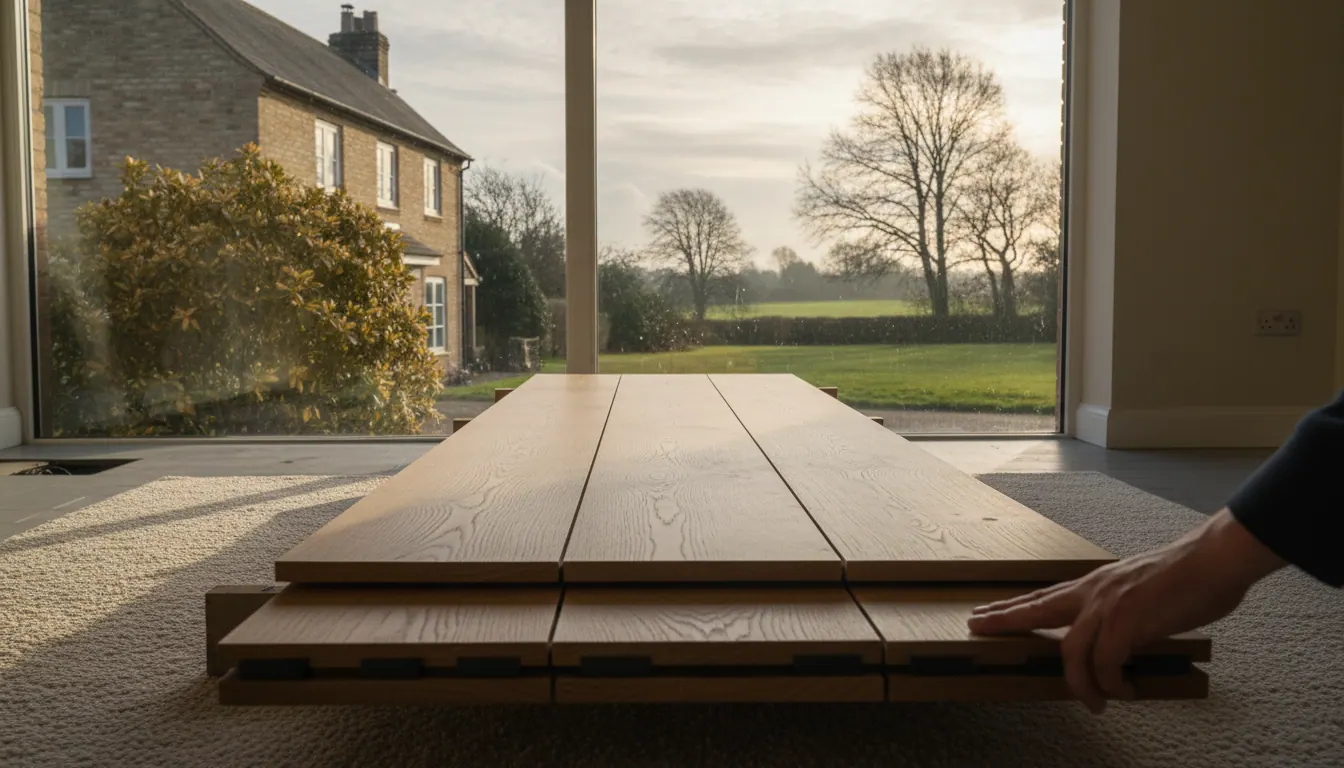
Engineered hardwood is real wood, but it is not a single solid plank. It is constructed in layers: a genuine hardwood wear layer on top, bonded to multiple layers of cross-ply timber or plywood beneath. The grain of each layer runs in a different direction, which is what gives the board its stability.
That cross-ply construction is the key difference from solid wood. Solid timber expands and contracts significantly as humidity and temperature change. Engineered boards do this too, but far less dramatically, because the opposing grain directions in the core layers resist the movement. The result is a floor that is far less prone to gapping, cupping or warping over time.
The hardwood wear layer is the part you see and feel. Depending on the product, it can be 2mm to 6mm thick. A thicker wear layer means the floor can be sanded and refinished more times before it reaches the end of its life.
How Is It Different From Laminate or LVT?
This is one of the most common questions we hear, and it matters for making the right choice.
Laminate has a photographic layer printed to look like wood, protected by a hard resin. It can look convincing, but it is not timber. Scratch through the surface and there is no wood underneath.
LVT (luxury vinyl tile) is a waterproof synthetic product with a printed design layer. Excellent in kitchens, bathrooms and high-traffic areas, and it handles damp subfloors better than timber will. We fit a lot of it and it performs brilliantly in the right setting. You can read more about how LVT compares to other options in our article on LVT vs Carpet for Older Newark Homes.
Engineered hardwood is actual timber through and through. The top layer is real oak, walnut, ash or whatever species you choose. It looks like wood because it is wood. It ages like wood. And fitted and maintained properly, it can last decades.
Which Type of Engineered Wood Is Best?
There is no single answer, but there are sensible principles to guide the decision.
Wear layer thickness matters most for longevity. A 3mm or 4mm wear layer gives you meaningful scope for sanding and refreshing the surface if it gets scratched or dull over the years. Thinner layers are fine for lower-traffic rooms but leave less margin.
Core construction affects stability. A quality plywood core is generally more stable and consistent than a board built on an HDF (high-density fibreboard) core, particularly in rooms where humidity fluctuates.
Species and finish are largely a matter of taste and use. Oak is the most popular choice by some distance, partly because it suits almost every interior style and partly because it is genuinely hard-wearing. Oiled finishes are easier to spot-repair than lacquered ones. Lacquered boards are simpler to maintain day to day.
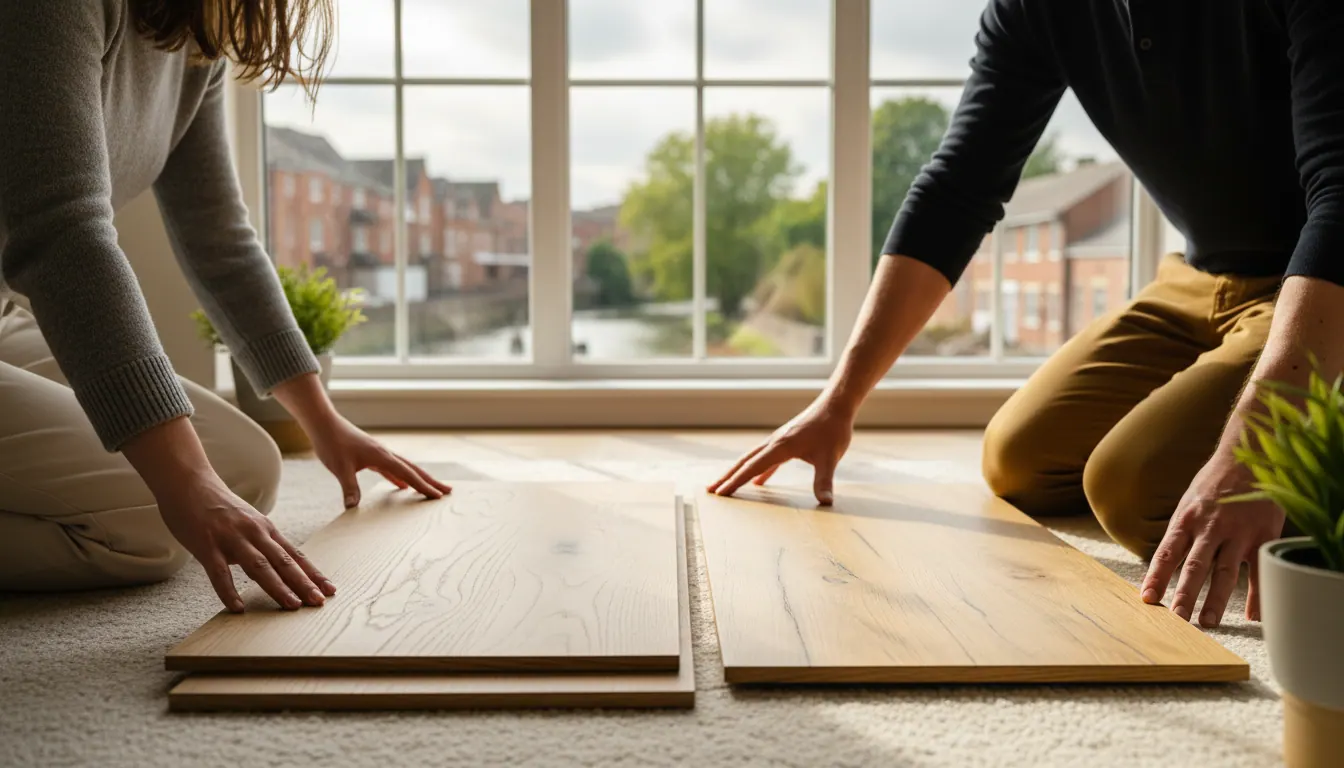
When customers ask us about brands, we are honest: there are excellent products at various price points, and there are also products that look impressive in a sample but perform poorly once fitted. We have seen both. We can advise on what we have seen perform well in real homes, and we bring samples to you so you can see them in your own light and alongside your existing décor. We do not have a showroom: the samples come to your house.
Does Engineered Hardwood Work With Underfloor Heating?
Yes, with conditions. Engineered hardwood is significantly better suited to underfloor heating than solid wood, precisely because of its greater stability. But it still requires care.
The subfloor temperature needs to be managed correctly. Most manufacturers specify a maximum surface temperature, typically around 27°C. Going above this risks drying the wood excessively, which leads to shrinkage and gapping.
Before fitting over an underfloor heating system, the heating should be run through a commissioning cycle to remove residual moisture from the screed. The boards then need to acclimatise in the room before installation. We cover this in more detail in our article on acclimatising wood flooring before installation, which is worth reading if you have UFH or are planning it.
What Does the Subfloor Need to Look Like Before Fitting?
This is where a lot of engineered hardwood installations go wrong, and it is something we take seriously.
Engineered boards are thinner than solid wood, which means any imperfection in the subfloor telegraphs through to the surface. A ridge, a dip, a patch of loose screed: all of it will be felt underfoot and may cause boards to flex, creak or, in time, de-bond.
The general tolerance for a subfloor before fitting engineered hardwood is no more than 3mm variation over a 1.8-metre span. In practice, many homes in Nottinghamshire and Lincolnshire, particularly older properties with original concrete or suspended timber floors, fall well outside this.
We do our own subfloor preparation: latex screeding, surface smoothing and floor levelling. We do not outsource this and we do not skip it. Getting the substrate right is the part of the job that determines whether the floor looks good in ten years or starts causing problems in two. If you want to understand more about why this matters, our article on subfloor preparation for flooring in Newark goes into the detail.
Damp is also a factor, particularly in older East Midlands properties. The East Midlands sits in a part of the country where ground-floor concrete slabs in older homes frequently show elevated moisture readings, and timber flooring laid directly over a damp subfloor will fail. Where damp is present, we install a damp proof membrane before any flooring goes down.
What Our Customers Say
Stuart Millard left us this review after his installation:
From the first meeting with Pro flooring we have been very happy with the service we recieved. We weren't sure what flooring we wanted but Nathan was brilliant and helped us by showing lots of samples and explaining the process to us. He turned up on time to do the job and we are very happy with his work. We would recommend him and Pro Flooring to friends and family.
That process, bringing samples to the house, taking time to explain the options, arriving when we say we will, is how every job starts. A lot of customers come to us unsure what they want. That is fine. Helping someone work out what will actually suit their home and their life is part of what we do.
Is Engineered Hardwood the Right Choice for Every Room?
Honestly, no. And we would rather tell you that upfront than fit something that will cause problems.
Engineered hardwood is an excellent choice for:
- Living rooms and dining rooms with stable humidity
- Hallways and landings (with appropriate finish and protection)
- Bedrooms
- Open-plan spaces where a consistent, premium look matters
- Rooms with underfloor heating, fitted correctly
We would steer you away from engineered hardwood in:
- Bathrooms and wet rooms (LVT handles moisture; timber does not)
- Kitchens where there is a risk of prolonged water exposure at the floor level
- Below-ground rooms or basements with persistent damp issues
If you are thinking about flooring across multiple rooms and want a consistent look, it is worth considering how engineered hardwood in the main living spaces might sit alongside LVT or carpet elsewhere. Our article on multi-room flooring projects in Newark covers exactly that kind of coordination.
Frequently Asked Questions
What is engineered hardwood flooring, in simple terms? It is a real wood floor made up of a genuine hardwood surface layer bonded to multiple layers of cross-ply timber or plywood underneath. The layered construction makes it more stable than solid wood, meaning it handles changes in temperature and humidity better. The top layer is real timber, so it looks, feels and ages like wood.
How does engineered hardwood compare to buying from a DIY retailer? Products from large DIY chains vary widely in quality, and the wear layer on budget boards can be very thin. More importantly, buying from a retailer means you handle fitting and subfloor preparation separately. We supply, prepare the subfloor and fit as one job, which means responsibility for the finished result sits with one team rather than being split across three.
Does engineered hardwood work in older Newark and East Midlands properties? It can work very well, but older properties need more subfloor preparation than newer builds. Uneven floors, suspended timber subfloors and damp concrete slabs are common in the region's older housing stock, and all of them need addressing before any timber floor goes down. We assess this as part of the free home measure.
How do I get a quotation for engineered hardwood flooring in Newark or the East Midlands? Get in touch and we will arrange a free home measure at a time that suits you. We bring samples to your house, assess the subfloor, and give you a written quotation once we understand exactly what the job involves. No pressure, no obligation.
If engineered hardwood flooring is something you are considering for your home in Newark-on-Trent, Nottinghamshire, Lincolnshire or Leicestershire, we are happy to come out, take a proper look and talk you through the options. Get in touch with us to book your free home measure.
Let's design your floor
Get in touch- LVT vs Carpet for Older Newark Homes: Which Suits Uneven Floors and Damp?
- Multi-Room Flooring Projects in Newark: How to Coordinate Colour & Material Across Your Home
- Subfloor Preparation for Flooring in Newark: Why DPM, Levelling & Screeding Matter
- Acclimatising Wood Flooring Before Installation: Why It Matters in East Midlands Homes